Mackenzie's Crossing 1837
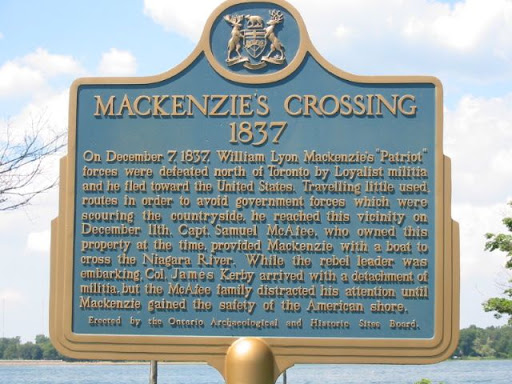
On Dec. 7, 1837, William Lyon Mackenzie's "Patriot" forces were defeated north of Toronto by Loyalist militia and he fled toward the United States. Travelling little used routes in order to avoid...
- toronto
- ontario
- alan brown
The Muskoka Road 1858
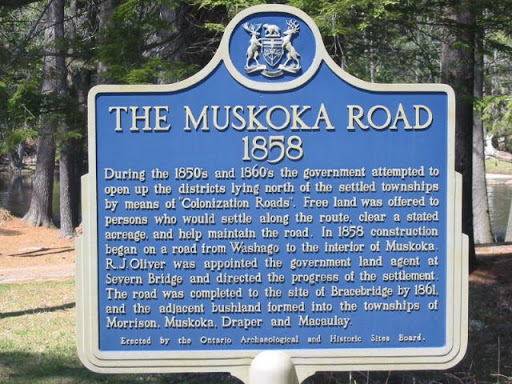
During the 1850's and 1860's the government attempted to open up the districts lying north of the settled townships by means of "Colonization Roads". Free land was offered to persons who...
- toronto
- ontario
- alan brown
The MacMillan Emigration 1802

In September, 1802, over 400 Highland emigrants, including more than 100 MacMillans, arrived at Montreal under the leadership of Archibald McMillan (Murlaggan) on board the vessels "Friends",...
- toronto
- ontario
- alan brown
Mary Ann Shadd (Cary) (1823-1893)
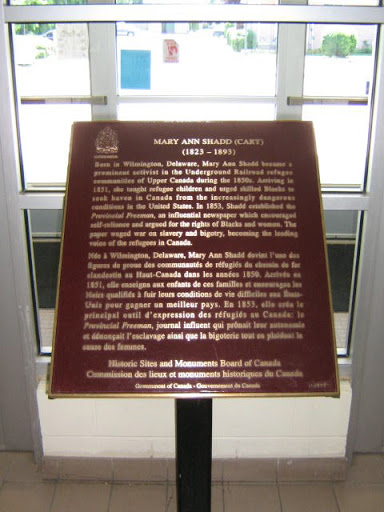
Born in Wilmington, Delaware, Mary Ann Shadd became a prominent activist in the Underground Railroad refugee communities of Upper Canada during the 1850s. Arriving in 1851, she taught refugee...
- toronto
- ontario
- alan brown
Mary (Molly) Brant (Tekonwatonti) (ca. 1736-1796)

A Mohawk woman of great diplomatic skill, Molly Brant exerted an extraordinary influence on the powerful Iroquois Confederacy. During the American Revolutionary War, she passed valuable...
- toronto
- ontario
- alan brown
McMartin House

Begun in 1830 for barrister Daniel McMartin (1798-1869), this imposing house symbolizes the wealth and social aspirations of this member of the Tory elite. Born at Williamsburg of Loyalist stock,...
- toronto
- ontario
- alan brown
The Monck Road

This road was constructed for the dual purpose of opening up a wilderness area to settlement and providing an alternative, less vulnerable military route between the upper Great Lakes and the...
- toronto
- ontario
- alan brown
The Mountain Portage

This portage around Kakabeka Falls formed a link in the historic Kaministiquia canoe route connecting Lake Superior with Lake of the Woods and the West. First recorded in 1688 by the...
- toronto
- ontario
- alan brown
The Missionary Oblates of Mary Immaculate

Arriving in Canada from France in 1841, the Missionary Oblates of Mary Immaculate have ministered from the Atlantic to the Pacific, and in the far North. "Missionaries to the Poor", they followed...
- toronto
- ontario
- alan brown
Middlesex Court House

Erected in 1830, this building was modelled after Malahide Castle, near Dublin, Ireland, the ancestral home of Colonel Thomas Talbot, founder of the Talbot Settlement. The site was a part of the...
- toronto
- ontario
- alan brown
Magnetawan Lock

The lock at Magnetawan, built by the Ontario Government, 1883-6, was replaced in 1911 by the present concrete structure. The original stone- filled timber cribwork measured 34 by 8.5 metres. The...
- toronto
- ontario
- alan brown
Major James Morrow Walsh 1840-1905

Born and educated in Prescott, Walsh was trained at military schools at Kingston and by 1873 had attained the rank of Major in the militia. In that year he was commissioned in the newly...
- toronto
- ontario
- alan brown
Macdonell House

Constructed in 1817-1819 by Montreal craftsmen for John Macdonell and his Métis wife Magdeleine Poitras, this house was one of the finest of several built in the area by retired North West Company...
- toronto
- ontario
- alan brown
The Michipicoten Canoe Route
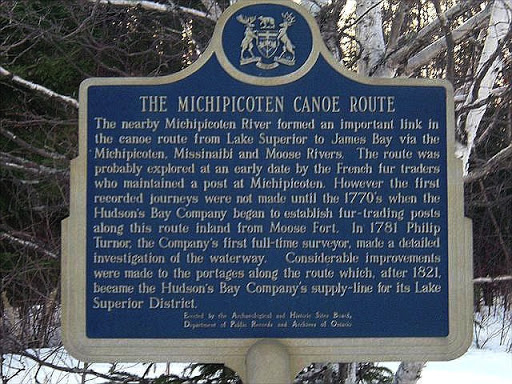
The nearby Michipicoten River formed an important link in the canoe route from Lake Superior to James Bay via the Michipicoten, Missinaibi and Moose Rivers. The route was probably explored at an...
- toronto
- ontario
- alan brown
The Mack Centre of Nursing Education

Dr. Theophilus Mack (1820-1881) emigrated from Dublin to Upper Canada with his family in 1832. He received his medical education at the Military Hospital at Amherstburg and at Geneva College,...
- toronto
- ontario
- alan brown
McNab Settlement

Archibald McNab (c.1781-1860), seventeenth chief of Clan McNab (Macnab), came to Canada in 1822. He obtained 33,000 ha on the Ottawa River in 1823 and two years later brought over 84 fellow Scots...
- toronto
- ontario
- alan brown
Mary Ann Shadd Cary 1823-1893

African Americans came to Canada in increasing numbers after the United States passed the Fugitive Slave Act in 1850. Some settled in segregated communities; others, like Mary Ann Shadd, promoted...
- toronto
- ontario
- alan brown
Mattawa House 1837
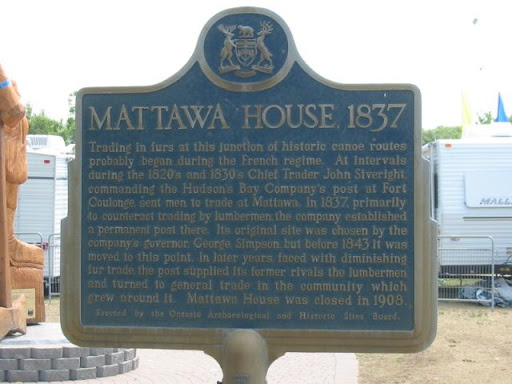
Trading in furs at this junction of historic canoe routes probably began during the French regime. At intervals during the 1820's and 1830's Chief Trader John Siveright, commanding the Hudson's...
- toronto
- ontario
- alan brown
Marie-Rose Turcot 1887-1977

Born in Laurierville, Quebec, Marie-Rose Turcot moved to Ottawa around the age of 20 to work in the civil service. Later, working as a journalist, Marie-Rose Turcot published in the daily...
- toronto
- ontario
- alan brown
Madeleine de Roybon d'Allonne c. 1646-1718

Of noble French birth, de Roybon was the first European woman to own land in what is now Ontario. She came to Fort Frontenac (Kingston), probably in 1679, where she acquired property from...
- toronto
- ontario
- alan brown