Kingston Dry Dock

Mississauga Point was for over 150 years the site of major shipyards when Kingston was one of the important ports and ship building centres on the Great Lakes. The significance of this industry...
- toronto
- ontario
- alan brown
Kingston Custom House

Designed by the Montreal architectural firm of Hopkins, Lawford and Nelson, the Kingston Custom House was built in 1856-59 for the government of the united Canadas. The symmetrical composition...
- toronto
- ontario
- alan brown
Kirkland Lake Gold Camp

The Larder Lake gold rush of 1906 was accompanied by discoveries of gold at Swastika and, in 1911, the first strike at Kirkland Lake was made by William H. Wright. The Tough-Oakes became...
- toronto
- ontario
- alan brown
The King's Royal Regiment of New York

The largest Loyalist Corps in the Northern Department during the American Revolution, the King's Royal Regiment of New York was raised on June 19, 1776 under the command of Sir John Johnson....
- toronto
- ontario
- alan brown
Kapuskasing - Garden City and Model Town

In 1921 the Kimberly-Clark and the Spruce Falls companies constructed a pulp mill in Kapuskasing that would employ many workers. To plan for Kapuskasing's anticipated growth, the...
- toronto
- ontario
- alan brown
"King" Capron 1796-1872

This house was built in 1831 by Hiram Capron, a native of Vermont who, in 1822, had emigrated to Norfolk County where he helped to establish one of Upper Canada's earliest iron foundries. He...
- toronto
- ontario
- alan brown
Kingston Fortifications

The site of the Royal Naval Dockyard during the War of 1812, Kingston assumed even greater strategic importance as the southern terminus of the Rideau Canal, which was built between 1826 and 1832....
- toronto
- ontario
- alan brown
Kent County Court House

In 1847 the Kent District was established and authority was given for the erection of a court house and jail at Chatham. One year later construction began according to plans submitted by the...
- toronto
- ontario
- alan brown
Kingston General Hospital
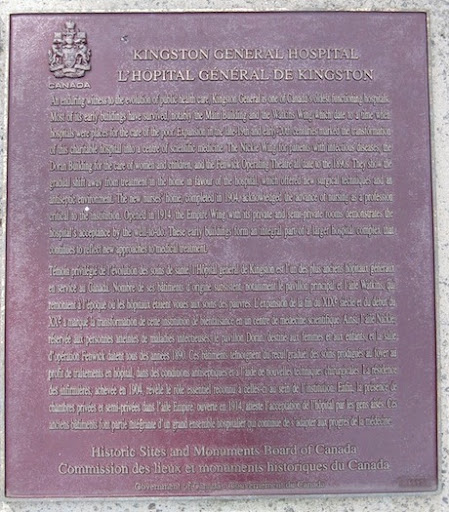
An enduring witness to the evolution of public health care, Kingston General is one of Canada's oldest functioning hospitals. Most of its early buildings have survived, notably the Main...
- toronto
- ontario
- alan brown
Kingston City Hall
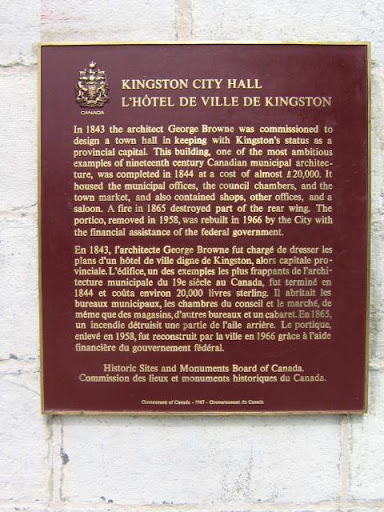
In 1843 the architect George Browne was commissioned to design a town hall in keeping with Kingston's status as a provincial capital. This building, one of the most ambitious examples...
- toronto
- ontario
- alan brown
The Kenté (Quinte) Mission

In 1668 Claude Trouvé and François de Fénelon, Sulpician priests from France, established this mission to serve Iroquois Indians on the north shore of Lake Ontario. Kenté, the Cayuga Village which...
- toronto
- ontario
- alan brown
Kenogamissi Post

Near this site in 1794, Hudson's Bay Company employees from Frederick House, 64 km to the northeast, established an outpost. Its objective was to counter the fur trading activities of the North...
- toronto
- ontario
- alan brown
Kay-Nah-Chi-Wah-Nung
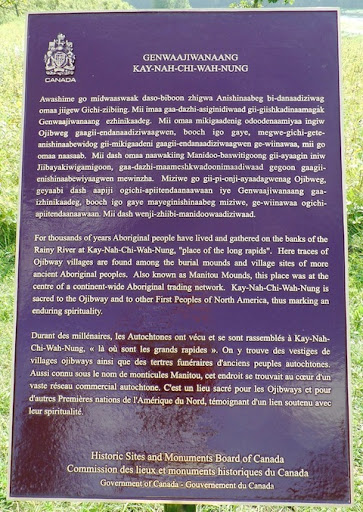
For thousands of years Aboriginal people have lived and gathered on the banks of the Rainy River at Kay-Nah-Chi-Wah-Nung, "place of the long rapids". Here traces of Ojibway villages are...
- toronto
- ontario
- alan brown
The Kenora Thistles, 1907

In January, 1907, a hockey team from Kenora, comprising E. Girouz (goal), A.H. Ross (point), S.I. Griffis (cover point), T. Hooper (rover), W. McGimsie (centre), R. Beaudro (right wing) and...
- toronto
- ontario
- alan brown
Kingston Post Office

In 1856-59 the government of the united Canadas erected the Kingston Post Office. Designed by the Montreal architectural firm of Hopkins, Lawford and Nelson, this limestone building shows...
- toronto
- ontario
- alan brown
The Kaministikwia Route

This chain of rivers, lakes and portages linking the St. Lawrence system with the waterways of the prairies had been known to the Indians for centuries when Jacques de Noyon first travelled it in...
- toronto
- ontario
- alan brown
Kapuskasing Internment Camp 1914-1920

When the First World War began, Canada established internment camps to detain persons viewed as security risks. Prejudice and wartime paranoia led to the needless internment of several...
- toronto
- ontario
- alan brown
Kagawong Mill 1925
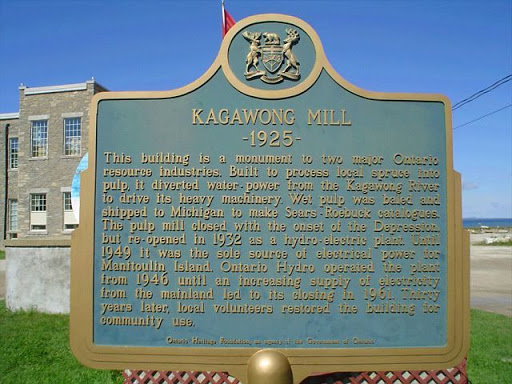
This building is a monument to two major Ontario resource industries. Built to process local spruce into pulp, it diverted water-power from the Kagawong River to drive its heavy machinery....
- toronto
- ontario
- alan brown
Johnstown District Court House and Gaol

In 1808 the provincial government authorized the erection of a court house and gaol at Elizabethtown (Brockville) to serve the District of Johnstown created ten years earlier. By 1811 a brick...
- toronto
- ontario
- alan brown
James Henry Coyne 1849-1942

Born in St. Thomas, Upper Canada, Coyne became Registrar of Deeds and, subsequently, Master of Titles, for Elgin County. Deeply interested in local history, he founded the Elgin Historical...
- toronto
- ontario
- alan brown