The Founding of Belle River

The settlement of this area began following the survey in 1793 of the lots fronting on the Belle River. Among the early settlers were many French Canadians from the vicinity of the Detroit...
- toronto
- ontario
- alan brown
The Founding of Ajax

In 1941, the Government of Canada established a shell-filling plant operated by Defence Industries Limited on this site. During its peak production, over 9,000 people from across the country...
- toronto
- ontario
- alan brown
Fort Amherstburg (Fort Malden)

The post was begun by the Royal Canadian Volunteers in 1796 to replace Detroit and to maintain British influence among the western Indians. As the principal defense of the Detroit frontier in...
- toronto
- ontario
- alan brown
The Founding of Spencerville

By 1821 Peleg Spencer was operating a grist-mill and sawmill on the South Nation River on a Clergy Lot he had leased in 1817, having previously owned a sawmill on the site from 1811 till 1814....
- toronto
- ontario
- alan brown
First Legislative Assembly of Upper Canada

The first session of the Legislative Assembly held at Newark (Niagara-on-the-Lake) from 17 September to 15 October 1792, introduced a limited form of representative government to the newly...
- toronto
- ontario
- alan brown
The Founding of Port Dover

By 1794 Peter Walker, the first settler in this area, had located at the mouth of Patterson's Creek, but a community did not begin to develop here until Dover, situated further upstream, was razed...
- toronto
- ontario
- alan brown
The Founding of Waterford
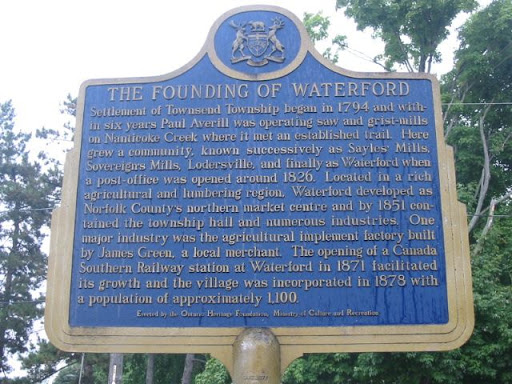
Settlement of Townsend Township began in 1794 and within six years Paul Averill was operating saw and grist-mills on Nanticoke Creek where it met an established trail. Here grew a community,...
- toronto
- ontario
- alan brown
The Founding of Point Edward

In 1838 John Slocum, a native of New York, established a commercial fishery on the site of a former military reserve here where the St. Clair River flows out of Lake Huron. The area...
- toronto
- ontario
- alan brown
Fanny 'Bobbie' Rosenfeld (1903-1969)

Shortly after her birth in Russia, Fanny Rosenfeld's family immigrated to Canada, settling in Barrie. An all-round athlete, she excelled in hockey, basketball, tennis and softball. She...
- toronto
- ontario
- alan brown
Fort Henry
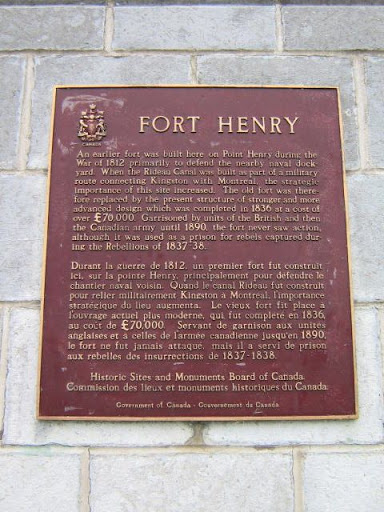
An earlier fort was built here on Point Henry during the War of 1812 primarily to defend the nearby naval dockyard. When the Rideau Canal was built as part of a military route connecting Kingston...
- toronto
- ontario
- alan brown
Founding of Simcoe
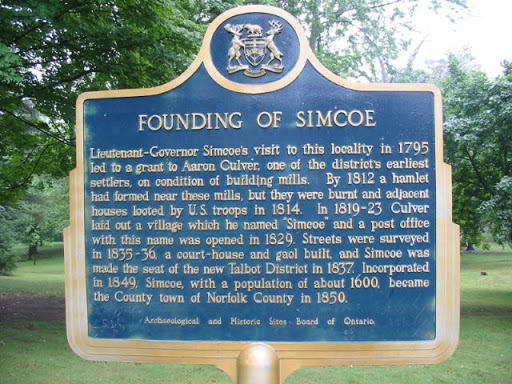
Lieutenant-Governor Simcoe's visit to this locality in 1795 led to a grant to Aaron Culver, one of the districts earliest settlers, on condition of building mills. By 1812 a hamlet had formed near...
- toronto
- ontario
- alan brown
Founding of Port Colborne

In 1831 the Welland Canal Company selected Gravelly Bay as the southern terminus of their waterway connecting Lakes Ontario and Erie, and in 1833 asked the permission of Lieutenant-Governor Sir...
- toronto
- ontario
- alan brown
First Military Test Flights

The first military demonstration of aircraft flight in Canada was given at Petawawa Camp in August 1909, by J.A.D. McCurdy and F.W. Baldwin, with the assistance of the Royal Canadian Engineers. On...
- toronto
- ontario
- alan brown
The Founding of Tweed

During the 1830s a settlement, initially called Munroe's Mills and later Hungerford Mills, developed here on the Moira River. In 1850, when its population had reached approximately 100, it was...
- toronto
- ontario
- alan brown
Fulford Place

Built in 1899-1900, this eclectic mansion evokes the opulent lifestyle of Canada's industrial elite at the turn of the century. Designed by American architect A.W. Fuller, it was the...
- toronto
- ontario
- alan brown
The Founding of Actinolite

In 1853 Billa Flint (1805-94) a lumberman, member of the legislative assembly and later of the senate, built sawmills here on the Skootamatta River. A village, at first named Troy but soon renamed...
- toronto
- ontario
- alan brown
The Founding of Forest

In 1858 Timothy Resseguie laid out the first village lots and the opening of a railway station here in 1859 on the recently completed Grand Trunk line from Guelph to Sarnia provided the...
- toronto
- ontario
- alan brown
The Founding of Ridgetown
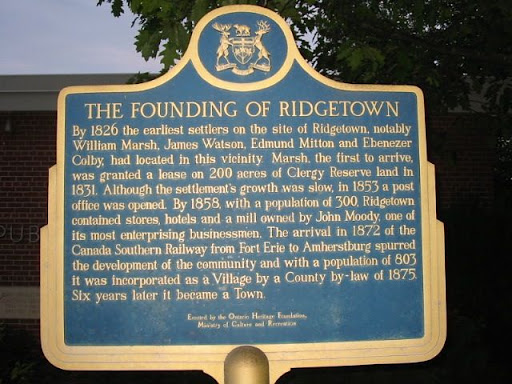
By 1826 the earliest settlers on the site of Ridgetown, notably William Marsh, James Watson, Edmund Mitton and Ebenezer Colby, had located in this vicinity. Marsh, the first to arrive, was granted...
- toronto
- ontario
- alan brown
The Forty-Ninth Parallel

At this point the 49th parallel of latitude north of the equator crosses the highway. This line forms the southern boundary of the western provinces of Manitoba, Saskatchewan, Alberta and most of...
- toronto
- ontario
- alan brown
The Founding of Richmond Hill

Settlers came to this district about 1794 after the construction of Yonge Street north from York (Toronto). The settlement prospered as a way station for travellers. Known as Mount Pleasant, the...
- toronto
- ontario
- alan brown