The University of Windsor

The University takes its origin from Assumption College (Roman Catholic) established here in 1857, and directed by the congregation of St. Basil after 1870. From 1919 to 1953, it was...
- toronto
- ontario
- alan brown
United Empire Loyalists
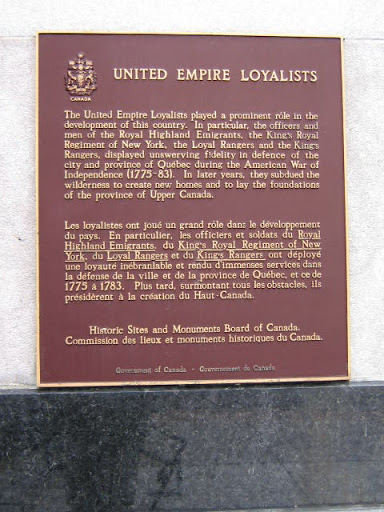
The United Empire Loyalists played a prominent role in the development of this country. In particular, the officers and men of the Royal Highland Emigrants, the King's Royal Regiment of New York,...
- toronto
- ontario
- alan brown
The Upper Canadian Act Against Slavery (1793)

Inspired by the abolitionist sentiment emerging in the late 18th century, Lieutenant-Governor J.G. Simcoe made Upper Canada the first British territory to legislate against slavery, which...
- toronto
- ontario
- alan brown
University of St. Jerome's College

One of several classical colleges established in Ontario during the mid-19th century, St. Jerome's was founded by Resurrectionist priests in 1865 to serve German Roman Catholics in Waterloo...
- toronto
- ontario
- alan brown
Umfreville's Exploration 1784
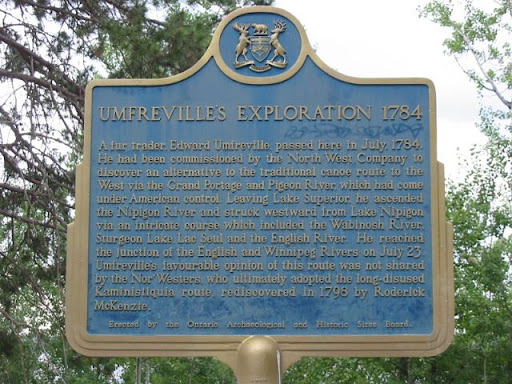
A fur trader, Edward Umfreville, passed here in July, 1784. He had been commissioned by the North West Company to discover an alternative to the traditional canoe route to the West via the...
- toronto
- ontario
- alan brown
Union of the North West and Hudson's Bay Companies

In the late eighteenth century, most of the fur traders using the Ottawa River-Great Lakes canoe route into the interior of North America belonged to the North West Company, which used Fort...
- toronto
- ontario
- alan brown
The Underground Railroad in Canada
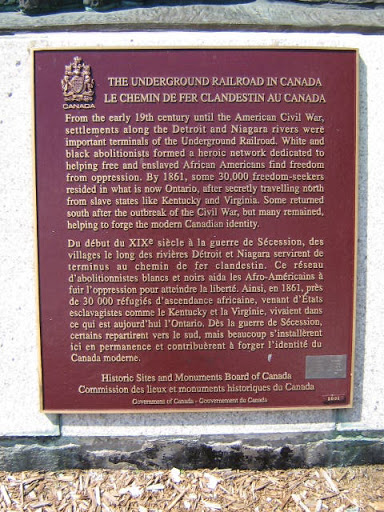
From the early 19th century until the American Civil War, settlements along the Detroit and Niagara rivers were important terminals of the Underground Railroad. White and black abolitionists...
- toronto
- ontario
- alan brown
Unitarian Universalist Church of Olinda

The Universalist faith developed in New England in the late 1700s and reached Canada in the early 1800s. Its central doctrine of universal salvation made it more liberal and inclusive than...
- toronto
- ontario
- alan brown
University of Ottawa
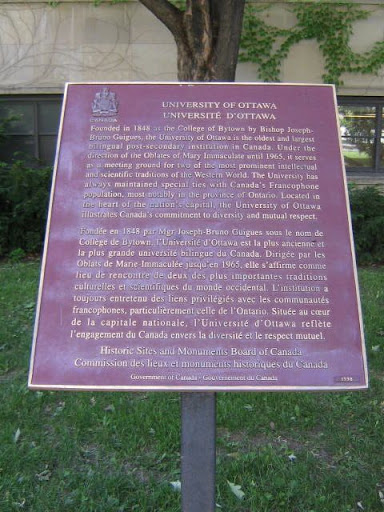
Founded in 1848 as the College of Bytown by Bishop Joseph-Bruno Guigues, the University of Ottawa is the oldest and largest bilingual post-secondary institution in Canada. Under the direction of...
- toronto
- ontario
- alan brown
Upper Canada's First Paper Mill 1826

The province's first paper mill began operations in 1826. Situated about 140 m downstream from here, it was owned by James Crooks (1786-1860), one of Upper Canada's most successful entrepreneurs....
- toronto
- ontario
- alan brown
University of Ottawa
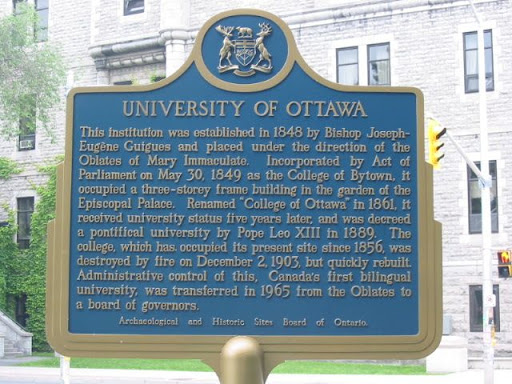
This institution was established in 1848 by Bishop Joseph-Eugene Guigues and placed under the direction of the Oblates of Mary Immaculate. Incorporated by Act of Parliament on May 30, 1849 as the...
- toronto
- ontario
- alan brown
Uxbridge Quaker Meeting House 1820

A good example of board and batten construction, this Meeting House was erected in 1820 to replace an earlier log structure. The building stands in the midst of the original Uxbridge...
- toronto
- ontario
- alan brown
Thomas and Frances Stewart

In 1822 the Stewart family emigrated from County Antrim, Ireland, to Upper Canada and the following year they began to farm this land on the Otonabee River. Thomas A. Stewart (1786-1847) served...
- toronto
- ontario
- alan brown
"Tiger" Dunlop 1792-1848
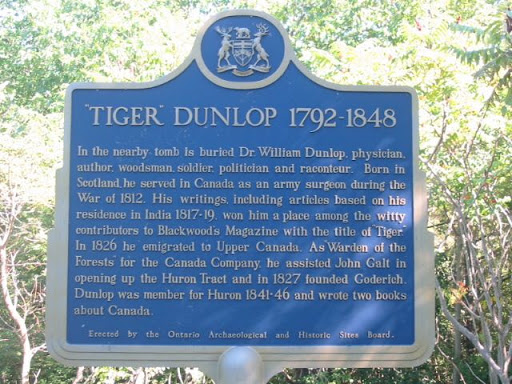
In the nearby tomb is buried Dr. William Dunlop, physician, author, woodsman, soldier, politician and raconteur. Born in Scotland, he served in Canada as an army surgeon during the War of...
- toronto
- ontario
- alan brown
Thomas Curtis Clarke 1827-1901

"The world of today differs from that of Napoleon Bonaparte more than his world differed from that of Julius Caeser, and this change has chiefly been made by engineering". These were the words...
- toronto
- ontario
- alan brown
The Tigress and Scorpion
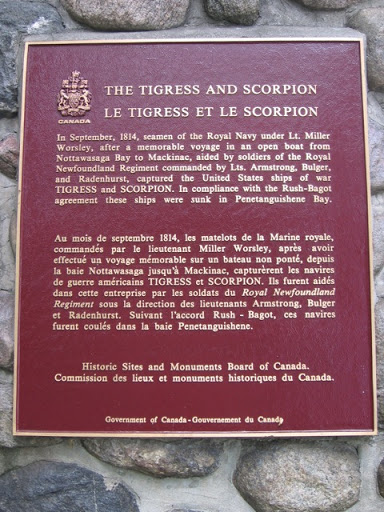
In September, 1814, seamen of the Royal Navy under Lt. Miller Worsley, after a memorable voyage in an open boat from Nottawasaga Bay to Mackinac, aided by soldiers of the Royal Newfoundland...
- toronto
- ontario
- alan brown
Tecumseh 1768-1813

Born in a Shawnee village in what is now Ohio, Tecumseh became in the 1770s co-leader with his brother, the Prophet, of a movement to restore and preserve traditional Indian values. He believed...
- toronto
- ontario
- alan brown
Timber Rafting on the Ottawa

The rafting of square timber down the Ottawa River, begun in 1806, reached its peak during 1861-91 and ended in 1909. Pine "sticks" from .1 to .2 square metres and 12 to 15 metres long...
- toronto
- ontario
- alan brown
The Talbot Road

This road, named after Col. Thomas Talbot, the founder of the Talbot Settlement, was one of Upper Canada's earliest pioneer highways. Surveyed in 1804 by John Bostwick, it ran from Sayle's...
- toronto
- ontario
- alan brown
Thayendanega (Joseph Brant) 1742-1807
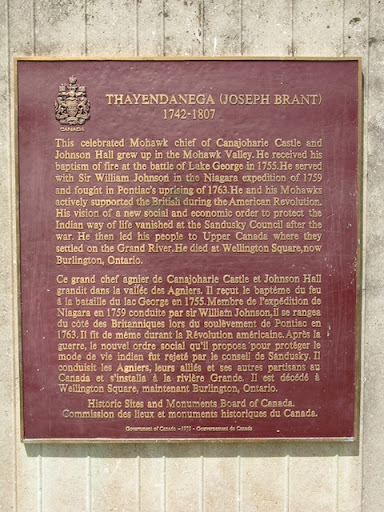
This celebrated Mohawk chief of Canajoharie Castle and Johnson Hall grew up in the Mohawk Valley. He received his baptism of fire at the battle of Lake George in 1755. He served with Sir William...
- toronto
- ontario
- alan brown